
No Monkey Business
What Yale's capuchin experiments reveal about where money actually comes from.

The story goes that scientists at Yale once ran a monkey brothel. In 2005, Stephen Dubner and Steven Levitt of Freakonomics fame told readers of the New York Times about an experiment they billed as "probably the first observed exchange of money for sex in the history of monkeykind." A male capuchin handed a female one of the metal tokens from the lab, the two of them mated, and the female then spent her token on a grape.
However, we do not actually know what happened between those two monkeys. The researchers noted that this was far from a regular occurrence, but it became editorialized into “monkey prostitution”. Nevertheless, the case does shed light on one of the most persistent conundrums in social theory: what is money? For there to be prostitution, money must change hands. Did it? After all, you could bring a good bottle of wine to a date and win the evening on your own merits, and nobody would file that under commerce.
The monkey experiment in question is real. Keith Chen, Venkat Lakshminarayanan and Laurie Santos wanted to know whether elements of human economic life reach back into our evolutionary past. They gave brown capuchins little metal discs (tokens) and taught them to swap the discs for food. The monkeys learned fast. They bought more of a treat when it got cheaper. They showed economic behaviour like loss aversion and other biases economists have found in people. Later work caught non-human apes weighing risky gambles with our framing quirks, treating tokens as symbols for absent things, rejecting a raw deal, and handing tokens to a partner in structured, repeated ways.
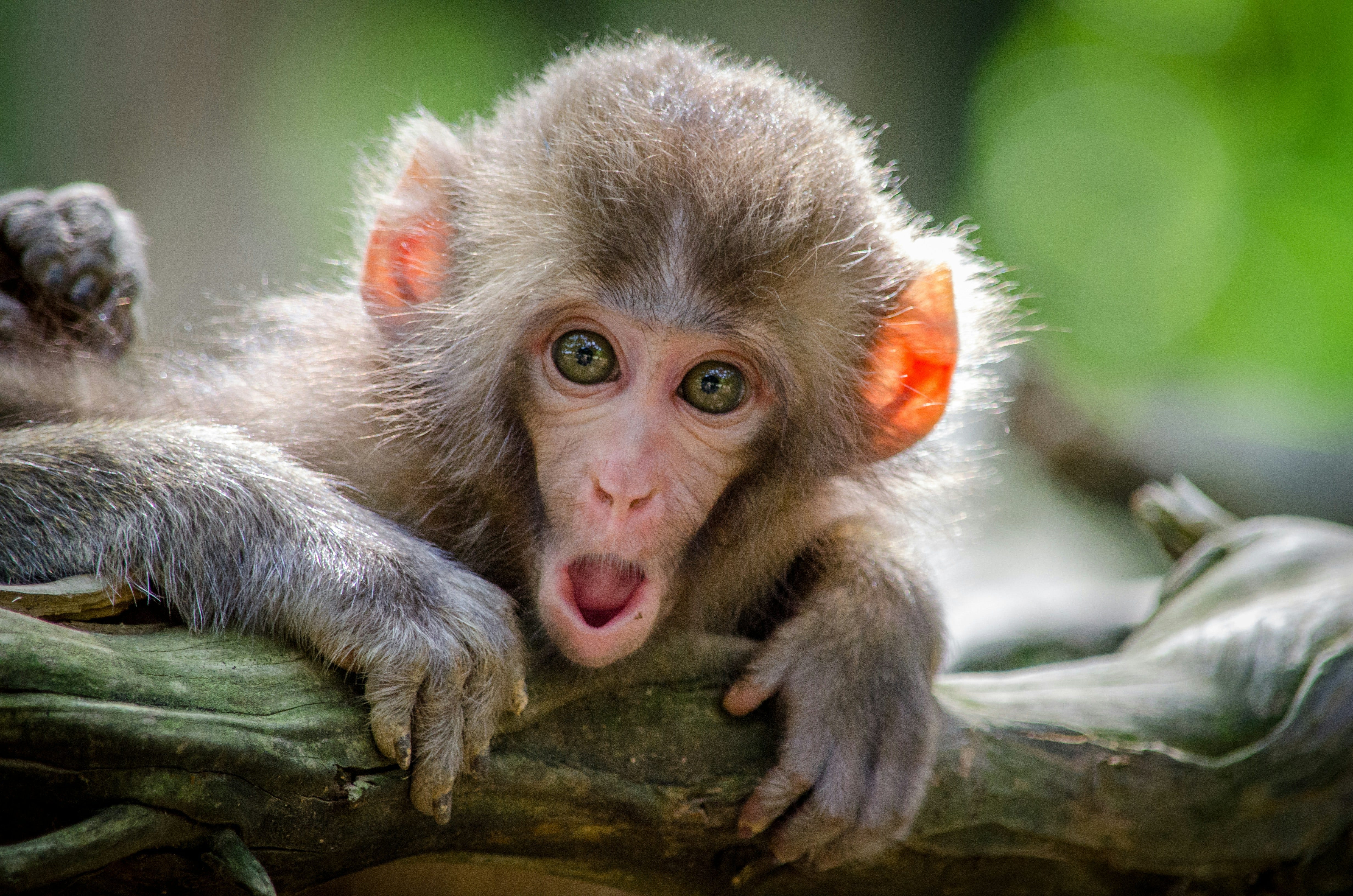
Primates exchange, bargain, compare options, learn what a token is worth, keep tabs on others, and sometimes pass tokens to each other. If money were simply the sum of these capacities, then capuchins would have developed a mint. Of course, they have not.
Across decades of experiments, no nonhuman primate group has been shown to keep a token in general circulation, moving from hand to hand across many transactions and many counterparties while holding its value between them. The transfers that happen are real but local and guided by researchers. They stay inside a particular relationship and a particular moment. A review of the field asked whether any primate token system qualifies as currency and concluded that it does not.
This has implications beyond primate business practices. Market accounts of money begin with trade, preferences, calculation, and the expectation that others will accept what you accept. Conversely, credit accounts focus rather on obligation, reciprocity, hierarchy, and memory. Interestingly, the capuchins display bits of both. They truck and barter and they keep a rough ledger of favours. What they never do is generalize one particular object, or one particular debt, into a claim the whole group will honour.
Crucially, money lets a claim outlive the encounter that created it. I can accept payment from one person and pass it to another, who does not need to know what I sold, who first issued the claim, or why either of us trusted it. This transferability allows a claim rooted in one relationship to become something more general. To date, no experiment with nonhuman animals has produced such a self-sustaining system. A given monkey can learn what a token does and use it, but this never becomes a self-sustaining rule within monkeydom.
Once such a rule exists, a claim no longer depends on the relationship that created it. Its value holds when it changes hands (or paws, or fins) because the wider group recognizes it as valid. Georg Simmel forumlated this in The Philosophy of Money. Money loosens our dependence on particular people while deepening our dependence on the social order that keeps the claim alive. David Graeber approached the same problem from the history of debt. Obligations can organize social life for centuries without becoming currency. The key shift comes when an obligation can leave one relationship, enter another, and still count, in other words, when it becomes impersonal.
For monetary claims begin to travel freely and impersonally, they need some machinery to uphold them. A community must establish what counts as payment, how value is measured, and when an obligation has been discharged. That machinery can be as simple as a shared tally or as elaborate as a banking system. In the Yale experiment, this machinery existed entirely on the human side. Researchers issued the tokens, set the prices, and guaranteed (or not) redemption. The monkeys learned to use this order, but they never sustained one among themselves.
The capuchin, or any other animals that we know of, have never run a brothel nor have they ever run a mint either. No shade on the monkeys though. Economics tends to see money as the natural sum of trade, memory and calculation. When we meet a creature with all three and no money, we file it away as a puzzle about animals. However, the puzzle is really about us. This story highlights the uncomfortable fact that our —very human— theories keep mistaking money's preconditions for money itself. Give a creature an appetite, a good memory, and a knack for exchange, even the tokens themselves, and yet you still do not have a reciepe for the emergence of money. So, where does it come from?